
Pasco Address History Sources
Different eras leave different evidence for Pasco County previous residents. The current parcel card supplies the legal and recorded keys needed to start. The Clerk's modern index carries the chain through recent decades, while historical search, microfilm, and counter service extend it further back. Directories and the federal census add occupants who did not own the land. Permit files help date changes to the structure rather than naming a full household.
| Source | Years It Covers | Where Held | What It Shows |
|---|---|---|---|
| Official Records index | January 1, 1975 to current | Pasco Clerk online and offices | Title parties, legal descriptions, liens, and plats |
| Historical Kofile records | 1876 to 1974 | Pasco Clerk historical search | Older deeds and recorded instruments |
| Property parcel card | Current roll; sale depth varies | Property Appraiser online and offices | Current owner, situs, legal text, building facts, sales links |
| Federal census | Public through 1950 | NARA and library genealogy access | Enumerated occupants, relationships, and location context |
| PascoGateway permits | Current web; special pre-April 2016 CO files | County Building or municipality | Construction, alterations, inspections, and occupancy dates |
| 1926 Polk directory | 1926 | Digitized volume | New Port Richey names, spouses, work, and street addresses |
For a twentieth-century or newer property, start with the parcel and deeds. For a household question near a census or directory year, add that dated source after the legal chain is stable. Exact local reverse-directory and Sanborn map runs were not verified in the research, so they should be requested from a library rather than assumed to exist.
Start with Pasco's Parcel
The Pasco County Property Appraiser search accepts a physical address and returns the parcel ID, current assessed owner, owner mailing address, full legal description, jurisdiction, land and building facts, exemptions, and parcel-specific sales rows. Copy these fields before looking for previous residents. A street address may change, but a legal description and the book-page link can keep the trail tied to the same land.
Physical, or situs, address means the location of the assessed parcel. Mailing address means the destination for tax correspondence. It may point to an absent owner and must not be reported as proof of residence. Homestead status can support an owner-occupancy inference under tax rules, but it is not real-time evidence of every person at the address. Recorded market sales may also take two to six weeks to reach the parcel system.
Note: Save each legal description as written because parcel splits, combines, replats, and road takings can disrupt an address-only search.
Trace Pasco's Deed Chain
The Pasco Clerk Official Records index works by name, instrument, or book and page. The fastest route begins with the exact book/page on the parcel card. Confirm the grantee or buyer, grantor or seller, execution and recording dates, and legal description on the deed image. Then use the seller's name to locate that party's earlier purchase. Every hop should retain the same land description or explain a recorded change.
- Verify the address and copy the parcel ID, current owner, situs, mailing address, jurisdiction, legal description, and every sale book/page.
- Open the newest instrument. Check its parties, dates, and legal description against the parcel card.
- Search the seller under the correct Party 1 or Party 2 role for DEED / PROPERTY TRANSFER records, then inspect the image.
- Repeat backward and note any replat, split, combine, corrective deed, or shift to metes-and-bounds wording.
- At the 1975 cutoff, move into historical Kofile or ask a Clerk counter for the earlier grantor-grantee index and deed book.
- Grantor and grantee
- The grantor gives an interest; the grantee receives it. Pasco's form uses Party 1 and Party 2, whose roles depend on record type.
- Chain of title
- The linked sequence of recorded transfers for the same land.
- Legal description
- The formal lot, block, plat, or survey wording that identifies land even when its street address changes.
- Instrument
- A recorded document with its own identifying number, such as a deed, lien, mortgage, or satisfaction.
Four Pasco Record Cutoffs
Pasco County previous residents cross four different access dates. The public Official Records name index begins in 1975. General public web images usually begin in 1990. The historical Kofile collection advertises deeds and other recorded material from 1876 through 1974. The Clerk's microfilm page describes coverage from 1887. These are not conflicting facts because an index, a document image, a historical database, and microfilm can each cover a different run.
Review the Clerk's current Official Records entry and coverage notice before using the captured page.
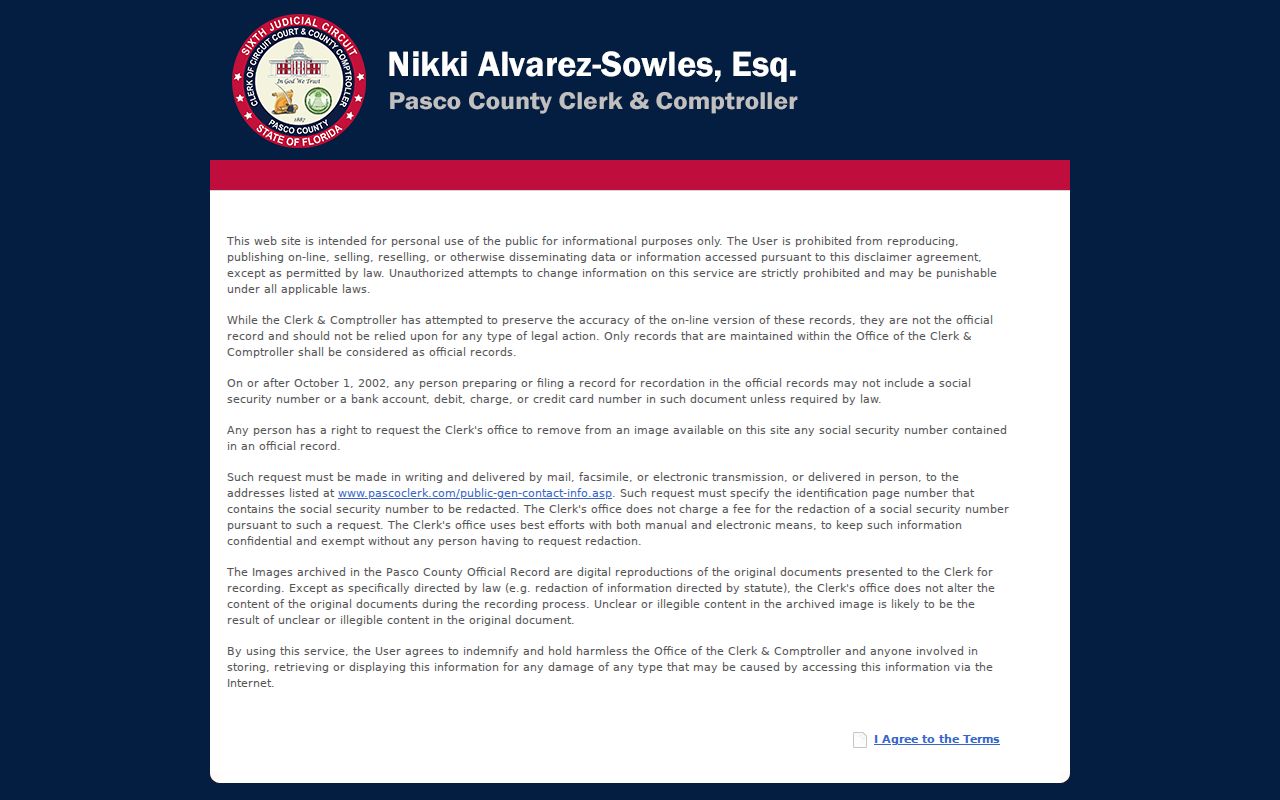
The notice marks the point where a modern title trail begins and where an older search needs another channel.
Check the Clerk's microfilm and image coverage when an indexed instrument lacks a public web image.
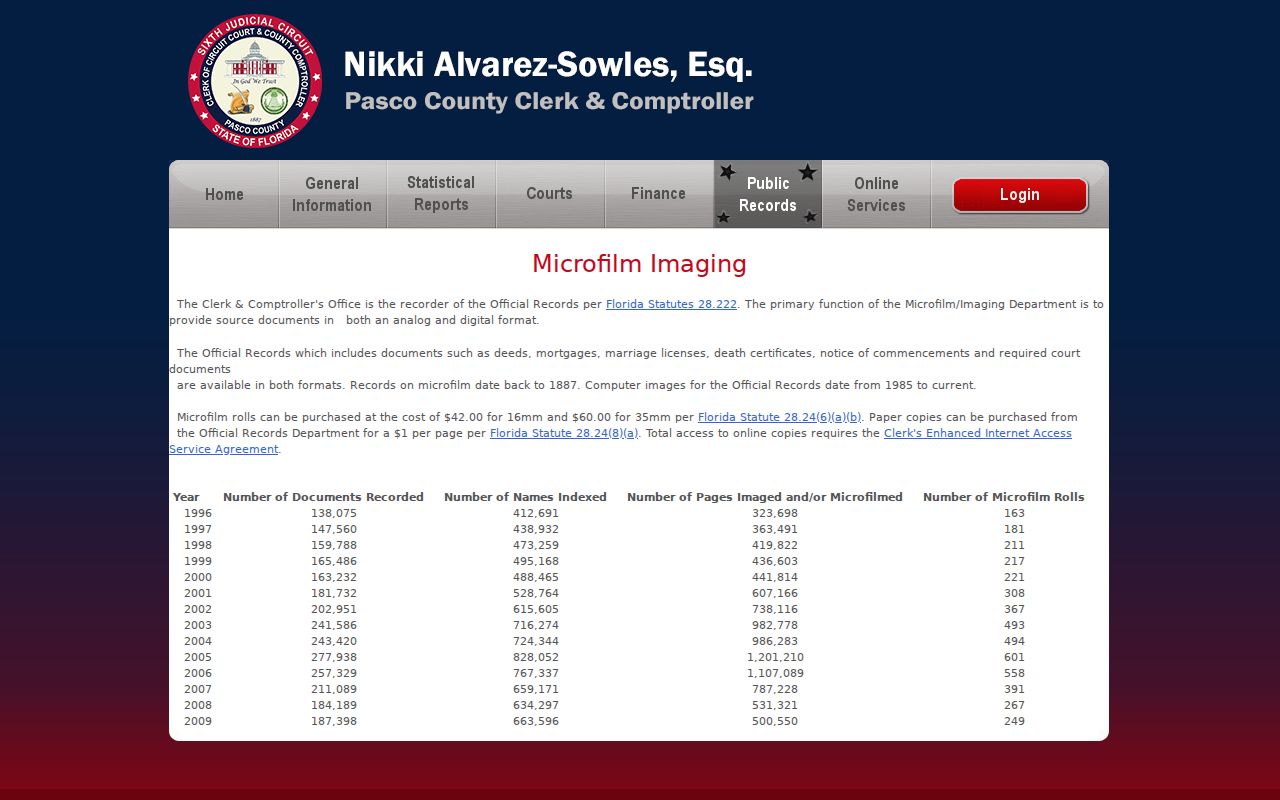
The microfilm route keeps older house-history work moving after the online display ends.
Before Pasco County Existed
Pasco County was created from Hernando County in 1887, yet the Clerk's historical archive advertises material beginning in 1876. That makes the early trail a geography problem as well as a date problem. A deed found in the Pasco system can reach before county creation, while other records for the same family or land may still be cataloged under Hernando County.
Historical postal names add another layer. Hatton later became Dade City, and older sources also use names such as Ellerslie, Ashley, Blanton, Cedar Tree, and Fort Dade. Search the name used at the time, then compare land description, relatives, and occupation rather than accepting a same-surname result. This Pasco geography is especially important for eastern railroad, citrus, cattle, and mill settlements.
See the Pioneer Florida Museum History Center's courthouse-book holdings with the captured collection page.
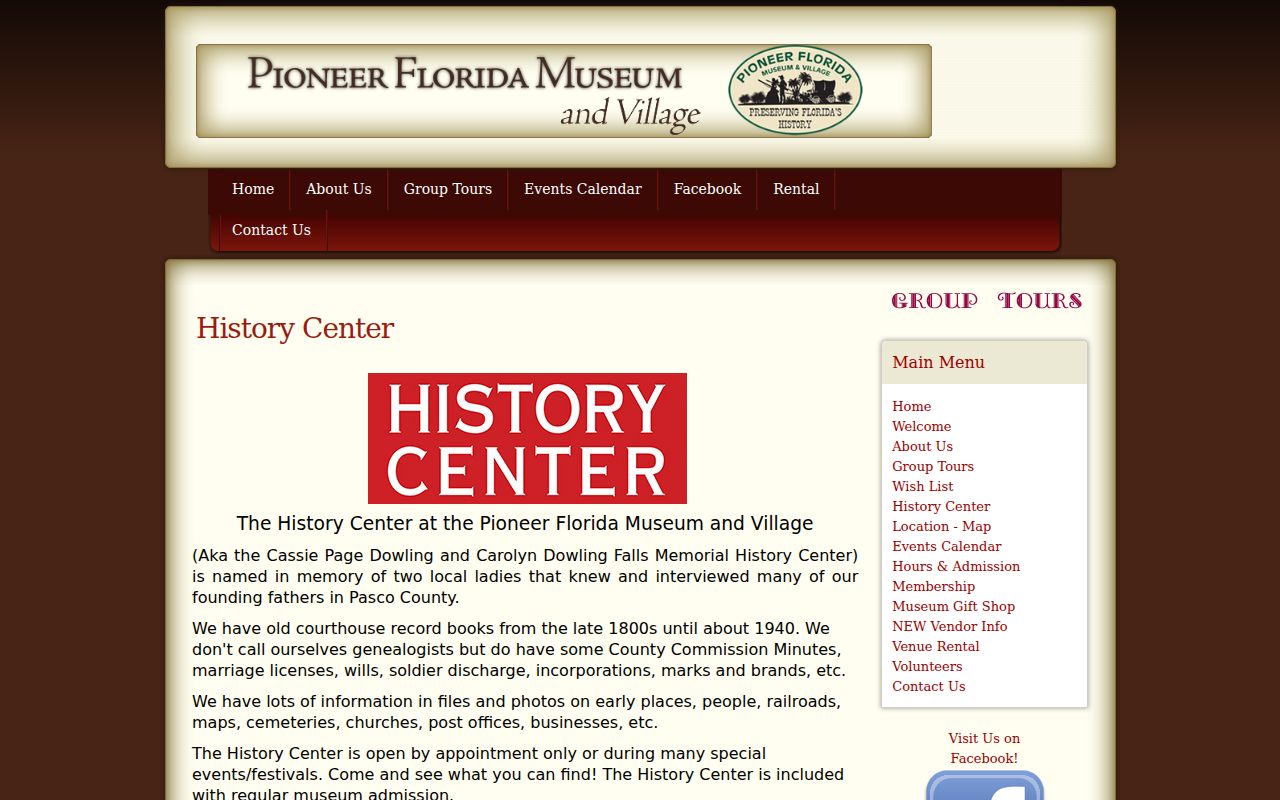
Those holdings offer an archival fallback when a pre-county or early-county name does not surface in a modern search.
Date Pasco Property Changes
Building records help explain when the structure changed, even though they do not establish all previous residents. Search PascoGateway by address or parcel, then compare record type, work description, creation date, issuance, status, inspections, and public documents. Older entries remain under the Permits tab, and pre-April 2016 certificate-of-occupancy dates may be in archived files. The parcel's jurisdiction decides whether county or municipal staff keeps the record.
Combine the permit chronology with the parcel card's year built and deed dates. A major alteration soon after a sale can support a house-history narrative. It cannot prove that the permit applicant occupied the home. Tax deeds and foreclosure listings are also leads rather than complete title reports, so follow them into the court case and recorded deed.
Find Pasco's Past Households
Deeds identify owners, not every person who lived there. The digitized 1926 Polk directory supplies a dated household layer for New Port Richey, including names, spouse references, occupations, employers, and street addresses. The Pasco entry is easy to miss because it sits inside a volume cataloged chiefly under Clearwater, Tarpon Springs, and Pinellas County. The New Port Richey section begins at printed page 141. The Pasco County directory book resources cover how to read that collection in depth.
Pair a directory entry with the 1920 or 1930 census, then test the same address and household members. Census schedules released through 1950 can supply occupants and relationships, although addresses may be incomplete or recorded by enumeration district. An enumeration district is the area assigned to one census taker. The directory fills a gap between census years, while the census can confirm family structure.
- Normalize the period street name and number, keeping any modern equivalent as a separate note.
- Search the directory's street or name section and record the exact spelling, spouse, work, and address.
- Locate the nearest public census year by community and enumeration district, then compare household members.
- Check the deed chain to learn whether the listed occupant owned the land or lived there under another arrangement.
- Use newspapers, obituaries, cemetery records, and probate only to extend a match supported by the earlier sources.
The State Library's Pasco County history bibliography and local library genealogy databases can point toward published histories, newspapers, and family sources.
The captured State Library bibliography shows the kind of catalog route that can extend a previous-resident search beyond deeds.
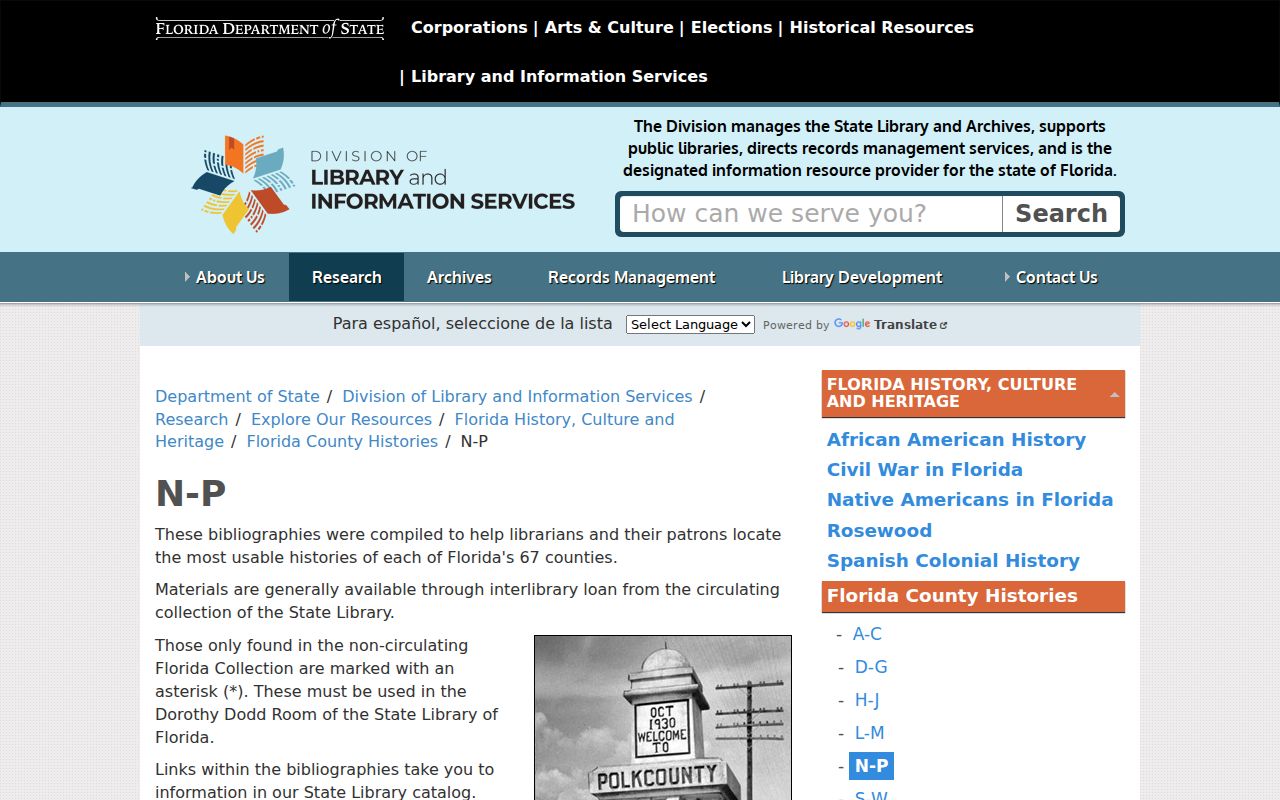
Bibliographic entries help identify books to request through a library when they are not fully digitized.
Lawful use. Research Pasco County previous residents for house history, genealogy, estate work, or personal curiosity. Never use an address trail to track, harass, threaten, or harm a living person.
Pasco Archive Fallbacks
The web trail will not contain every past resident or every old image. Clerk counters in Dade City and New Port Richey can supply older files and certified copies. The county library's genealogy databases, the West Pasco Historical Society, the Pioneer Florida Museum, and the State Library bibliography add local-history routes. A precise request should include the address form used in that era, parcel or legal description, names already found, and a tight date range.
Open the Pasco genealogy transcription and finding-aid archive alongside its captured landing page.

Transcriptions can reveal a name or record group, but the original custodian copy remains the best source for a final citation.
Remote certification is another recent option. The Clerk introduced E-Certify in July 2024 for tamper-proof certified electronic records. It helps when a formal copy is needed without a counter visit, subject to the record being eligible and available through that service.
Note: Missing reverse-directory or Sanborn years should be described as an unverified local gap, never filled with assumed coverage.